He Was Asleep for Most of It. His Neighbors Elected Him Mayor Four Times Anyway.
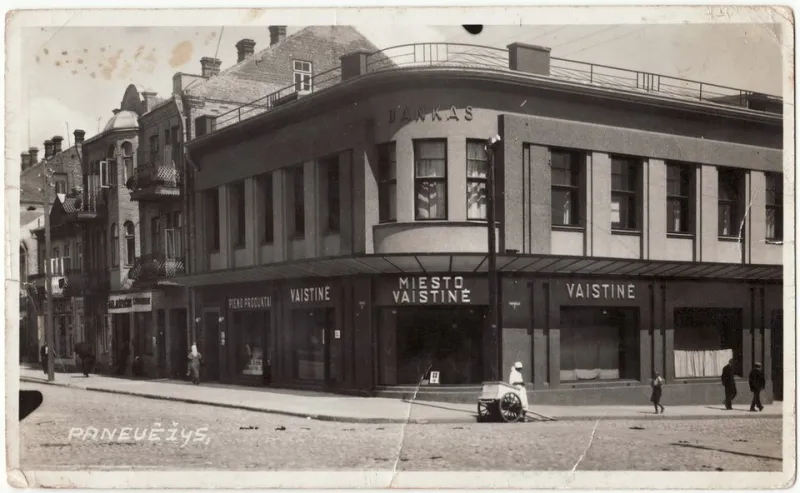
Photo: Unknown authorUnknown author, Public domain, via Wikimedia Commons
Democracy is a system built on participation. In Millhaven, Illinois — a farming community small enough that the post office and the grain elevator were practically the same conversation — participation was, by the 1930s, running on fumes.
 Photo: Millhaven, Illinois, via mir-s3-cdn-cf.behance.net
The Depression had a way of doing that to small towns. People were tired. Crops were uncertain. Local politics felt like one more thing to argue about when everyone was already arguing about money, weather, and whether the county road commissioner was ever going to fix the stretch of Route 9 that turned to soup every March. When election season rolled around, a lot of Millhaven's residents showed up to the polling place out of habit more than enthusiasm, penciled in their choices, and went home to worry about other things.
This, as it turned out, was exactly the kind of civic atmosphere in which something completely ridiculous could take root.
The Protest Vote That Got Out of Hand
The first time it happened was 1931. The incumbent mayor, a man nobody particularly liked but nobody felt strongly enough about to actively organize against, was running for his third term against a challenger most voters found equally uninspiring. Faced with two options that generated roughly zero enthusiasm, a loose cluster of neighbors — farmers, mostly, who gathered at the feed store on Saturday mornings — decided to register their dissatisfaction the only way available to them: the write-in.
The name they chose was Harold Fenner.
 Photo: Harold Fenner, via images.findagrave.com
Fenner was a retired grain merchant in his late sixties who had lived in the county his entire life. He was well-liked in the way that quietly decent people tend to be — respected, uncontroversial, and completely uninterested in public office. He had never run for anything. He was not asked for his permission. He was not informed of the plan. He was, at the time the group settled on his name, almost certainly at home, probably asleep in his chair after supper, entirely unaware that his neighbors were nominating him for mayor of the town.
The write-in votes for Fenner numbered somewhere between thirty and forty, depending on which account you trust. In a normal election, that would have been a footnote. But 1931 was not a normal election in Millhaven. Turnout was historically low — fewer than ninety votes were cast in total — and they split almost evenly between the two official candidates. Fenner's protest bloc, unified and consistent, edged him into first place by a margin of four votes.
Harold Fenner had won the mayorship of Millhaven, Illinois, without trying, without knowing, and without any intention of doing anything about it.
The Part Where It Should Have Stopped
When the results were posted, the men at the feed store apparently found this funnier than they expected. The incumbent's supporters were baffled. The challenger's supporters were annoyed. The county clerk, faced with a legitimate write-in winner, dutifully logged the result and sent the appropriate notices.
Fenner received a letter informing him of his election. According to the accounts pieced together later, he assumed it was a mistake and did not respond. The town, lacking a mayor who showed up, operated on autopilot — the town clerk handled routine business, the council met without a presiding officer, and nobody pushed the issue hard enough to force a resolution.
Then 1933 came around, and the feed store group did it again.
This time it was less protest and more tradition. The same rotating cast of neighbors, amused by what had happened two years prior and still underwhelmed by the official candidates, wrote in Fenner's name again. Turnout was again dismal. The write-in bloc was again cohesive. Fenner won again, this time by six votes.
The pattern repeated in 1935 and 1937. Four consecutive elections. Four consecutive wins. A man who had never attended a single council meeting, never given a speech, never shaken a hand in a campaign context, and — crucially — never once been told he was winning.
The Morning He Found Out
The story, as it filtered into local record, holds that Fenner finally learned the truth in 1938, not from an official notification but from a conversation at the barbershop. A younger man mentioned offhandedly that Fenner had "been mayor for years," apparently assuming this was common knowledge. Fenner, by this point in his early seventies, initially thought the man was pulling his leg.
He was not.
Fenner's reaction, according to the barber who witnessed it, was a long pause followed by a single question: "Did I do a decent job?"
The answer, in practical terms, was that nobody could really say — because nobody had actually been doing the job in his name. Millhaven had been functioning in a quiet administrative gray zone for the better part of a decade, with Fenner technically holding an office he had never occupied.
There is no record of Fenner pursuing any formal action over the situation. He reportedly found it more amusing than alarming once the initial shock wore off. He declined to stand for election in 1939, and the town returned to electing someone who was willing to show up.
What Millhaven Accidentally Proved
The Fenner elections are a genuinely strange artifact of what happens when democratic apathy collides with small-town stubbornness. The men who kept writing his name weren't trying to create a constitutional crisis. They were tired farmers making a low-stakes joke that, through the pure arithmetic of low turnout, kept landing.
What makes it oddly legit — and oddly American — is that the system worked exactly as designed. Votes were cast. Votes were counted. The winner was declared. The fact that the winner was a man asleep in his armchair who had no idea any of it was happening was, technically, not the system's problem.
Harold Fenner served four terms as mayor of Millhaven, Illinois. He attended zero meetings. He gave zero speeches. He collected zero salary. And by most accounts, the town got along just fine.