He Missed His Bus Stop and Accidentally Built a Fast Food Empire
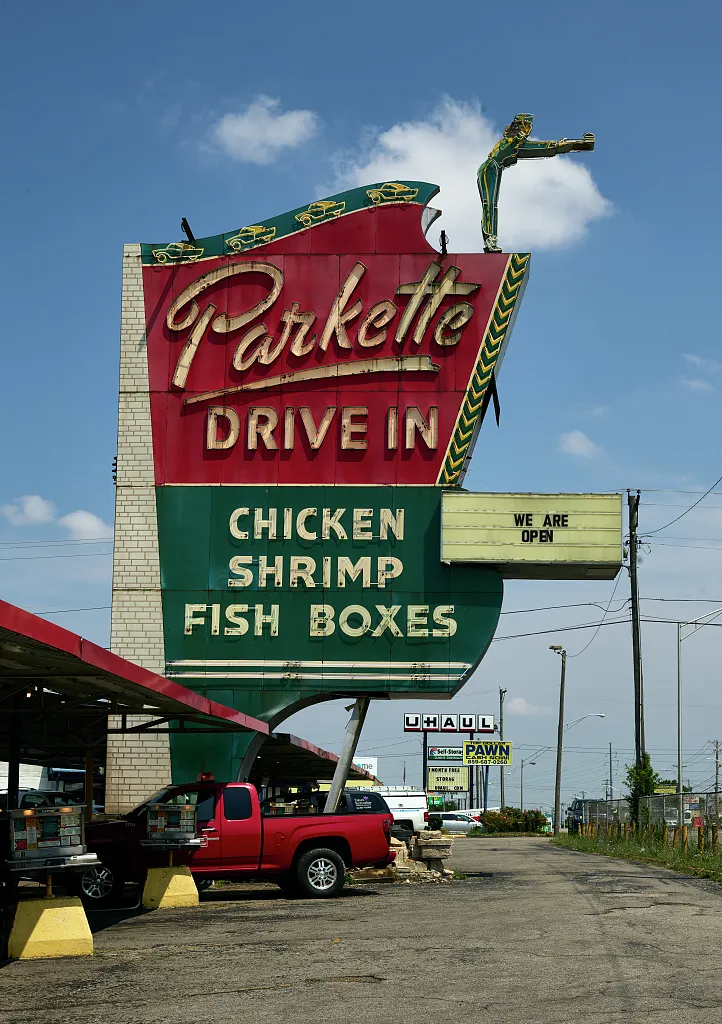
Photo: Carol M. Highsmith, No restrictions, via Wikimedia Commons
There's a version of American success that looks like hustle, vision, and relentless grinding. And then there's Earl Dunning's version, which looked more like falling asleep on a city bus in Cincinnati.
 Photo: Earl Dunning, via images.findagrave.com
The year was 1953. Earl was a municipal garbage collector — steady work, decent pay, deeply unglamorous. He rode the same bus route home every single weekday, got off at the same corner, walked the same four blocks to his apartment. Routine was the whole point. Routine was the comfort.
Then one Tuesday afternoon, Earl dozed off and blew past his stop.
The Wrong Corner
He woke up six blocks too far south, in a part of town he didn't know well, with sore feet and no real interest in walking back. A diner on the corner — a narrow, slightly run-down place called Harmon's — had its door propped open. Earl went in for coffee and a seat.
The place was nearly empty, which wasn't surprising. Harmon's had been struggling for the better part of three years. The owner, a wiry former Navy cook named Gerald Harmon, was behind the counter having what appeared to be a very intense conversation with himself. He was, in fact, talking through a decision he'd already essentially made: he was going to close the restaurant.
But first, he was going to explain exactly why to this stranger who'd just sat down.
"I've got the best burger sauce in Cincinnati," Gerald told Earl, unprompted, sliding over a coffee cup. "Problem is, nobody knows about it because nobody comes in here."
Earl, being a polite man, asked what was in it.
What followed was a forty-minute monologue about a sauce Gerald had developed over two years — a tangy, slightly sweet blend that he'd originally built around a smoked paprika base, layered with a combination of ingredients he'd sourced from a Hungarian deli three streets over. He'd perfected it, he said, just in time for the restaurant to fail anyway.
The Accidental Partnership
Earl wasn't a businessman. He had no background in food service, no capital to speak of, and no particular reason to be sitting in this diner other than a broken sleep schedule. But he did have a brother-in-law named Raymond who'd been looking for a reason to leave his accounting job for two years.
Something about the conversation stuck. Earl came back the next week, brought Raymond, and the three men spent an afternoon eating burgers and talking numbers. Gerald's books were a disaster. But the sauce — Raymond agreed — was genuinely something.
The deal they struck was informal to the point of recklessness. Raymond would handle the money. Earl would use his city connections to help Gerald secure a second, better-located space. Gerald would cook. They shook hands, split the cost of a new sign, and opened a second Harmon's location near a transit hub in early 1954.
It worked almost immediately.
From Two Locations to Two Hundred
What made Harmon's click wasn't just the sauce, though the sauce was real. It was timing. The mid-1950s were the years when American car culture was exploding, suburbs were expanding, and people were hungry — literally and figuratively — for fast, consistent, affordable food that felt like it had a personality. Harmon's had personality.
By 1958, there were eleven locations across Ohio and Kentucky. By 1963, the number had crossed fifty. The chain never went fully national the way McDonald's or Burger King did, but throughout the Midwest, Harmon's became a genuine institution — the kind of place people argue about with the same energy they bring to barbecue debates.
Gerald Harmon eventually bought out Raymond's share and brought his two sons into the business. Earl, who never wanted to run anything, reportedly took a modest equity stake that made him genuinely comfortable for the rest of his life. He kept working his garbage route until retirement, which his coworkers found either admirable or baffling depending on who you asked.
What the Whole Thing Actually Means
The story of Earl Dunning and Harmon's Diner is not a story about genius. It's not a story about disruption or innovation or any of the words business schools love. It's a story about a tired man, a wrong bus stop, and a cook who needed one person to listen to him at exactly the right moment.
Gerald Harmon had the sauce the whole time. What he didn't have was someone to accidentally walk through his door.
That's the part that's genuinely hard to sit with. How many Harmon's Diners are out there right now — places with something real, something worth building on — that just never got their wrong-stop moment? How many Gerald Harmons closed up shop and went home?
Earl Dunning himself, interviewed in a Cincinnati newspaper in 1971, was asked what he thought made him successful. He thought about it for a moment.
"I was tired," he said. "And the coffee smelled good."
Somewhere, a business school professor is furious. And somewhere, the right person is falling asleep on the wrong bus.