A Broken Vending Machine Jammed Two Snacks Together — Now It's a $50 Million Brand
Nobody Planned This. That's Kind of the Point.
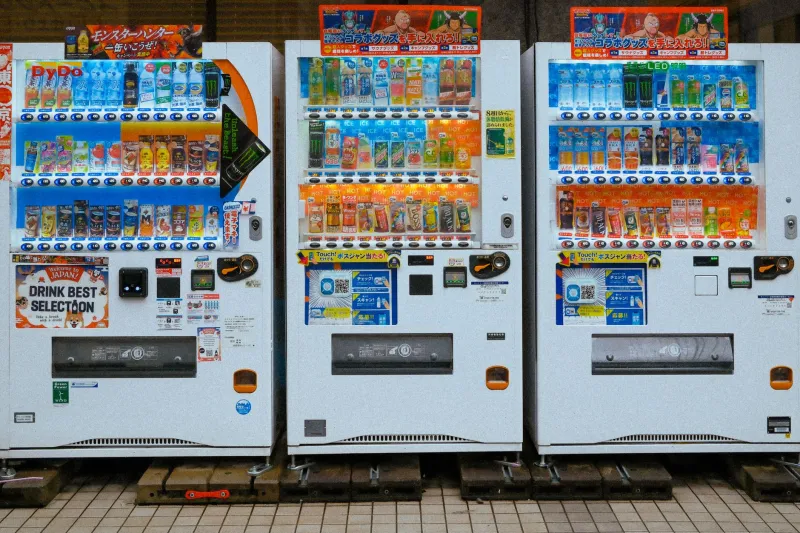
There's a vending machine sitting in the lobby of a snack company's Virginia headquarters that looks, at first glance, like any other vending machine. Slightly scuffed. A little dated. The kind of thing you walk past without thinking twice.
Except this particular machine has a small brass plaque mounted next to it. And if you read the plaque, you'll learn that the product responsible for roughly a third of the company's annual revenue was invented inside it — completely by accident — when it broke down.
The Malfunction Nobody Reported
The story begins in the mid-2010s, in the kind of mid-size office building that exists in every suburban business park in America: fluorescent lighting, a kitchen with a coffee maker that's always slightly burnt, and a vending machine in the hallway that everyone uses and nobody maintains.
The machine in question had been jamming periodically for weeks. The specific failure was a coil mechanism issue — the spiral that pushes products forward was misaligned in one column, causing items to drop inconsistently. Sometimes a bag would get stuck. Sometimes two would drop at once. Facilities had been notified. Nobody had gotten around to fixing it.
On an otherwise unremarkable Tuesday afternoon, an employee — a sales coordinator named Marcus, by most accounts — fed the machine a dollar and a half and punched in the code for a particular cheese-flavored snack. The machine whirred, jammed briefly, and then dropped two bags: his selection and, from the adjacent coil, a bag of a sweet, glazed nut mix that had been sitting in the neighboring slot.
Marcus, who was hungry and unbothered by the windfall, ate both. At the same time. Mixing them.
And then he stopped chewing and thought: this is actually incredible.
From Breakroom Discovery to Viral Moment
The combination — a sharp, salty cheese puff alongside a sweet, caramelized nut — hit a flavor contrast that food scientists sometimes describe as "dynamic pairing": the kind of taste experience where two things that have no business being together somehow make each other better.
Marcus posted about it on social media that afternoon. Not as a business pitch. Just as a funny observation — something along the lines of the vending machine broke and accidentally invented a new snack, someone get me a patent.
The post did numbers. Not viral-viral, but enough — a few thousand shares, a handful of food bloggers picking it up, a couple of regional news mentions about the "vending machine flavor hack." Within a week, people across the country were deliberately buying both products and mixing them at home, posting their own versions, tagging the original brands.
The Company That Was Paying Attention
Here's where the story shifts from "funny internet moment" to "legitimate business origin story."
The snack company whose cheese puff product had been one half of the accidental combination had a small but attentive social media team. They saw the posts. They saw the engagement. And — critically — someone in their product development department decided to actually try the combination before dismissing it.
They tried it. They agreed with Marcus.
What followed was about 14 months of internal development: working out the right ratio of sweet to savory, finding a coating process that could replicate the flavor contrast in a single product, testing it in regional markets, and eventually launching it as a standalone SKU under a name that nodded, loosely, to the accidental origin story.
The product launched nationally and promptly sold out in its first two weeks at retail. It was reformulated slightly after the first run based on consumer feedback — the sweetness was dialed back about 15 percent — and relaunched to even stronger numbers.
The Numbers That Make the Story Stick
Within three years of national launch, the product had crossed $50 million in annual retail sales. It now consistently ranks as the company's top-performing new product of the past decade and has spawned two line extensions — a spicier version and a limited-edition seasonal variant — both of which have performed above projections.
The original vending machine from the Virginia office building was tracked down, purchased from the building's facilities department for a reported $200, and installed in the company's headquarters lobby. The brass plaque was added on the product's third anniversary.
Marcus, for his part, received a formal acknowledgment from the company and — depending on which version of the story you believe — either a modest finder's fee, a lifetime supply of the product, or both.
What a Broken Coil Spring Taught a Snack Company
Food industry analysts who've written about the case tend to focus on the responsiveness of the company's product team — the willingness to take a random social media post seriously and actually follow it through development. That part is legitimately impressive.
But the more interesting element, from a pure story standpoint, is simpler than that.
A machine broke. A guy was hungry. He ate two snacks at once and told the internet about it. And now there's a brass plaque.
Sometimes the best product development process is a jammed coil spring and someone who didn't feel like making two separate trips to the vending machine.