He Survived Both Nuclear Bombs and Spent 40 Years Proving It Actually Happened
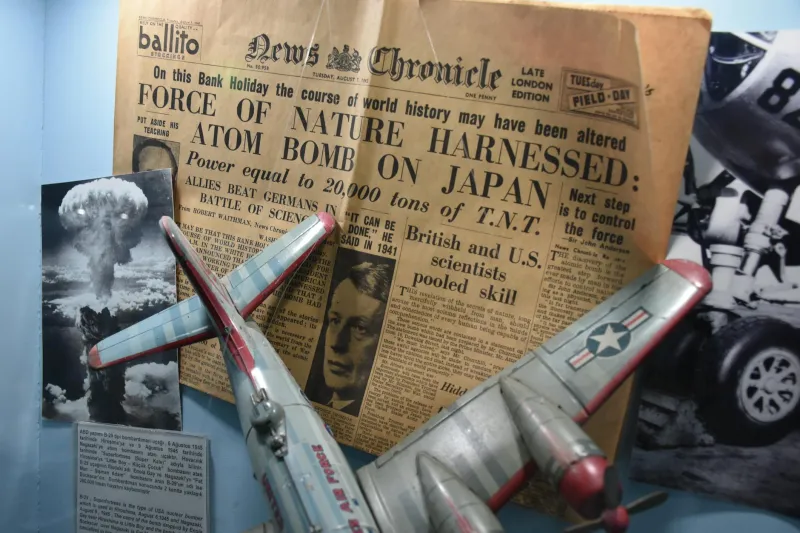
The Impossible Survivor
Imagine surviving a nuclear bomb. Now imagine surviving two of them — three days apart, in different cities. It sounds like the plot of a disaster movie, but for Tsutomu Yamaguchi, it was just the beginning of a lifelong battle to get anyone to believe his story.
On August 6, 1945, Yamaguchi was wrapping up a three-month business trip in Hiroshima when the world changed forever. The 29-year-old naval engineer was walking to catch a streetcar when a blinding flash lit up the sky. The first atomic bomb had just detonated less than two miles from where he stood.
When Lightning Strikes Twice
The blast threw Yamaguchi to the ground, temporarily blinded him, and left severe burns across his face, arms, and legs. But he was alive. After spending the night in a bomb shelter, he made his way to the train station with two colleagues who had also survived. His destination? Home to Nagasaki, where his wife and infant son were waiting.
Three days later, on August 9, Yamaguchi was in his company's office in Nagasaki, telling his boss about the devastating new weapon he'd witnessed in Hiroshima. His supervisor was skeptical — one bomb couldn't possibly destroy an entire city. That's when the second atomic bomb exploded, just over a mile away from their building.
Once again, Yamaguchi found himself thrown to the ground by the blast. Once again, he survived.
The Fight for Recognition
You'd think surviving both atomic bombings would make Yamaguchi famous, but for decades, the Japanese government refused to officially recognize his dual-survivor status. Japan had established a system to provide medical care and financial support to atomic bomb survivors, called hibakusha, but Yamaguchi's case was so unprecedented that bureaucrats didn't know how to handle it.
The government acknowledged him as a survivor of Nagasaki, where he lived, but initially rejected his claims about Hiroshima. Officials demanded proof — medical records, witness statements, documentation that had largely been destroyed in the atomic blasts themselves.
A Decades-Long Battle
Yamaguchi spent the next 40 years fighting red tape and skepticism. He submitted application after application, provided testimony from fellow survivors, and underwent countless medical examinations. The radiation exposure had left him with severe health problems — stomach cancer, hearing loss in one ear, and cataracts — but proving he'd been exposed twice seemed impossible.
The absurdity wasn't lost on him. "I was the only person in the world to survive both atomic bombs," he later said, "but the government treated me like I was lying."
It wasn't until 2009, when Yamaguchi was 93 years old, that the Japanese government finally recognized him as a survivor of both bombings. He had become the first and only person officially certified as a double atomic bomb survivor.
The Reluctant Witness
For most of his life, Yamaguchi rarely spoke publicly about his experiences. The trauma was too raw, the memories too painful. But as he aged and other survivors began dying, he felt compelled to share his story. In his final years, he traveled internationally, speaking about the horrors of nuclear weapons and advocating for disarmament.
"Having experienced atomic bombings twice and survived, it is my destiny to talk about it," he said during a 2009 documentary interview. "I have had many chances to die, but I survived. I have to convey what happened."
The Statistics of Impossibility
The odds of surviving one atomic bomb were already slim — approximately 200,000 people died in the two attacks combined. But surviving both? Researchers estimate that only about 165 people were present in both cities during the bombings. Of those, Yamaguchi was the only one to receive official government recognition as a double survivor.
What makes his story even more remarkable is the timing. If he had left Hiroshima even one day earlier, or if his company had been located anywhere else in Nagasaki, his story would have been completely different.
A Legacy of Resilience
Yamaguchi died in 2010 at age 93, just months after finally receiving official recognition. His death marked the end of a unique chapter in human history — he was likely the last person who could provide firsthand testimony of both atomic bombings.
But his legacy extends beyond his impossible survival story. His decades-long fight for recognition highlighted the bureaucratic challenges faced by atomic bomb survivors and helped improve the system for future hibakusha.
His story also serves as a powerful reminder of human resilience. Yamaguchi didn't just survive two nuclear bombs — he lived a full life afterward, raised a family, built a career, and eventually found the strength to share his traumatic experiences with the world.
In a world where we often focus on the destructive power of nuclear weapons, Yamaguchi's story offers something different: proof that sometimes, against all odds and logic, the human spirit can endure even the unthinkable.