A Single Typo Made This Man the Accidental Owner of a U.S. Island for Three Decades
When the Government Makes Oops-Level Mistakes
In 1962, a federal clerk somewhere in Washington D.C. was having what we can only assume was a very long day. While processing routine land transfer documents, they accidentally typed the wrong parcel number on a deed, transferring ownership of a 12-acre island off the Maine coast to James Morrison, a Boston accountant who had actually purchased a small vacation cabin on the mainland.
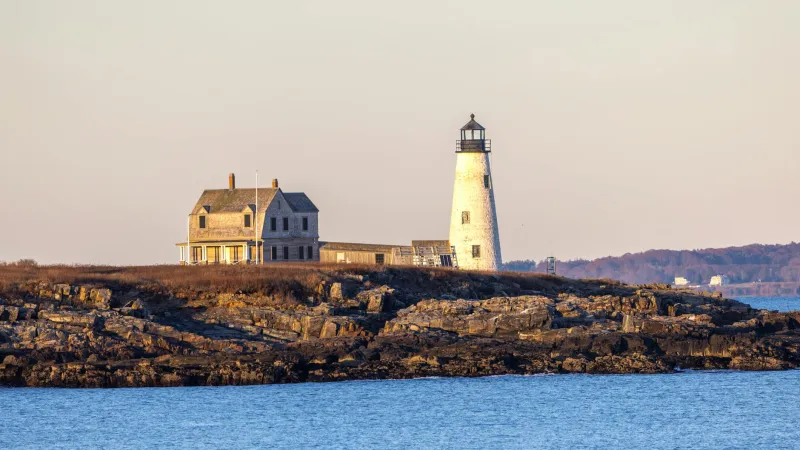
Morrison discovered the error in 1965 while reviewing his property documents for insurance purposes. Instead of owning a modest lakeside retreat, he apparently held legal title to Gull Island, complete with its lighthouse, Coast Guard facilities, and a small research station operated by the National Weather Service.
The reasonable response would have been to call the government immediately and sort out the mistake. Morrison was not feeling particularly reasonable.
The Bureaucratic Bermuda Triangle
What followed was a masterclass in how federal bureaucracy can turn a simple clerical error into a decades-long administrative nightmare. Morrison contacted the Bureau of Land Management, who referred him to the Coast Guard, who referred him to the General Services Administration, who referred him back to the Bureau of Land Management.
Each agency acknowledged that yes, there had clearly been an error, and yes, Morrison legally owned an island he'd never set foot on. But nobody wanted to take responsibility for fixing it because correcting the mistake would require admitting that the federal government had accidentally given away sovereign U.S. territory to a private citizen.
Meanwhile, Morrison was receiving property tax bills from the state of Maine for an island worth approximately $2.3 million in 1960s money. The state, apparently, was perfectly happy to tax property regardless of how accidentally someone had acquired it.
The Accidental Island Lord
Morrison, being an accountant, approached his unexpected island ownership with characteristic precision. He researched maritime law, studied property rights, and discovered that his ownership was, legally speaking, absolutely legitimate. The deed was properly filed, properly notarized, and properly recorded. The fact that it was completely wrong didn't make it any less official.
For a brief period in the early 1970s, Morrison seriously considered asserting his ownership rights. He consulted lawyers about establishing residency, explored the possibility of charging the government rent for their facilities, and even looked into whether he could claim territorial waters around the island.
The Coast Guard, understandably, was not amused by these inquiries. They'd been operating a lighthouse and weather station on what they thought was federal property, only to discover they were technically squatters on some accountant's private island.
The Island That Time Forgot
What makes this story particularly absurd is how routine everything became. For nearly three decades, Morrison paid property taxes on an island he didn't want while the federal government operated facilities on property they didn't own. The National Weather Service collected data, the Coast Guard maintained the lighthouse, and Morrison filed tax returns that included a $2.3 million asset he'd never actually seen.
Periodically, new federal employees would discover the situation and panic, assuming they'd uncovered some massive security breach. Investigations would be launched, memos would be written, and meetings would be scheduled. Then someone would explain that yes, everyone knew about this, and no, nobody had figured out how to fix it without creating an even bigger paperwork disaster.
Morrison, for his part, settled into a routine of annual correspondence with various federal agencies, politely inquiring whether they'd like to purchase his island back. The responses were always variations of "we're looking into it" and "this matter is under review."
The Most Anticlimactic Resolution Ever
The situation finally resolved itself in 1994, not through any grand legal proceeding or bureaucratic breakthrough, but because Morrison died and his estate wanted nothing to do with owning an island covered in federal facilities. His heirs quietly transferred the property back to the government through a quitclaim deed, essentially giving it away rather than dealing with the administrative headache.
The federal government accepted the transfer with what can only be described as relief, immediately reclassifying Gull Island as federal property and pretending the whole thing had never happened. No press releases were issued, no official statements were made, and no acknowledgment was given that the United States had spent thirty years illegally occupying a private citizen's property.
The Lesson Nobody Learned
The most remarkable aspect of the Gull Island situation isn't that it happened, but how utterly normal everyone treated it once it did. Federal employees went to work every day on an island they didn't own, Morrison paid taxes on property he'd never visited, and the entire situation persisted for three decades because fixing it would have required someone to admit that the federal government makes mistakes.
Today, Gull Island operates as a normal federal facility, its lighthouse guides ships safely to harbor, and its weather station provides critical data for maritime navigation. Somewhere in a federal archive, there's probably still a file marked "Gull Island Ownership Issue - RESOLVED" that no one will ever read again.
And somewhere in Boston, Morrison's accountant probably still tells stories about the client who accidentally owned an island because someone in Washington couldn't type.