When Taking the Wrong Alley Made a Garbage Man Richer Than His Boss
The Most Expensive Wrong Turn in Brooklyn History
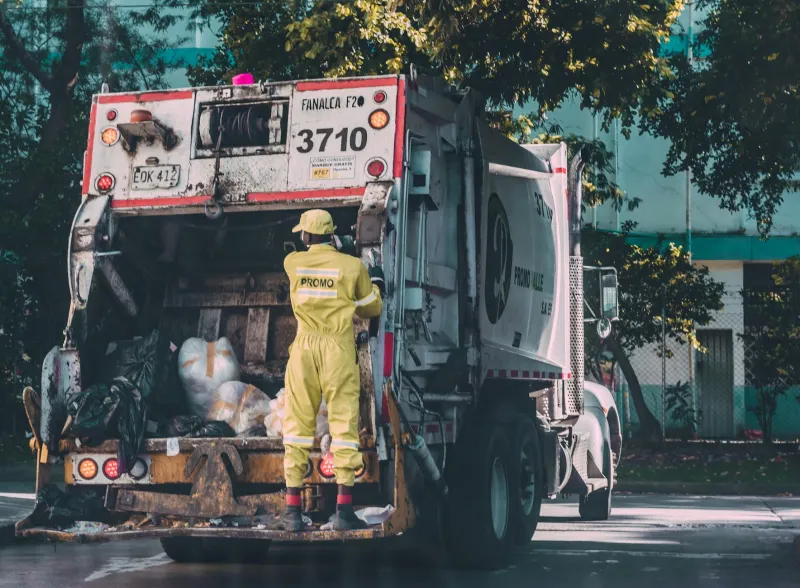
James Dunn had been collecting garbage in Brooklyn for eight years when he made the mistake that would change his life forever. On a muggy Tuesday morning in July 1947, running behind schedule and desperately seeking a shortcut, the 34-year-old sanitation worker decided to cut through an unfamiliar alley near Red Hook.
What should have been a simple detour turned into something that sounds like it came straight out of a treasure hunter's fever dream. But this wasn't fiction—this was just another Tuesday in post-war America, where the most ordinary people stumbled into the most extraordinary situations.
A Crack in the Pavement Changes Everything
Dunn was maneuvering his garbage truck through the narrow alley when he heard an ominous cracking sound beneath his wheels. Getting out to investigate what he assumed was a broken sewer grate, he discovered something far more interesting: a section of concrete that had completely caved in, revealing a metal container buried just beneath the surface.
Most people might have reported it to the city and moved on with their day. Dunn, however, possessed that particular combination of curiosity and boldness that separates the ordinary from the legendary. He pried open the container with a crowbar from his truck.
Inside, wrapped in oilcloth and packed with surprising care, were stacks upon stacks of cash. Not just any cash—crisp bills from the 1920s and early 1930s, perfectly preserved and totaling what would later be calculated as over $2 million in Depression-era currency.
The Bootlegger's Last Secret
The money, investigators would later discover, belonged to Vincent "Vinny the Vault" Torrino, a local bootlegger who had operated one of Brooklyn's most successful speakeasies during Prohibition. Torrino had apparently buried his life savings in 1934, just as federal agents were closing in on his operation.
Here's where the story gets even stranger: Torrino had died of a heart attack in 1941, taking the location of his buried fortune to the grave. For six years, his family had been searching Brooklyn with metal detectors, following every rumor and chasing every lead. They'd been looking in the wrong neighborhood entirely.
The irony wasn't lost on anyone involved. While Torrino's own family had spent years and thousands of dollars hunting for the treasure, a garbage collector had found it completely by accident while trying to save five minutes on his route.
When Found Treasure Becomes Legal Nightmare
Discovering buried treasure might sound like every person's dream, but Dunn quickly learned that actually keeping found money involves more lawyers than most people see in a lifetime. The legal battle that followed his discovery became almost as famous as the find itself.
Torrino's surviving relatives immediately claimed the money rightfully belonged to them. The city of New York argued that anything found on public property belonged to the municipal government. The federal government suggested that since the money likely came from illegal activities, it should be forfeited to the Treasury.
Dunn, meanwhile, hired a lawyer with his life savings and prepared for what would become a three-year legal odyssey. His argument was beautifully simple: he found it, it was abandoned, and under New York's "finder's keepers" laws, it belonged to him.
The Verdict That Surprised Everyone
In 1950, after countless hearings and appeals, the court reached a decision that satisfied absolutely no one while somehow being completely fair. The judge ruled that the money would be split three ways: one-third to Dunn as the finder, one-third to Torrino's estate, and one-third to the city of New York.
Dunn walked away with roughly $667,000—a sum that, adjusted for inflation, would make him a multimillionaire today. Not bad for taking a wrong turn.
The Depression-Era Treasure Map That Never Existed
Dunn's discovery exposed something that historians and treasure hunters had long suspected: America is essentially dotted with hidden Depression-era hoards. During the 1930s, when banks were failing and people had little faith in financial institutions, burying money became surprisingly common.
The FBI estimates that hundreds of similar caches remain hidden across the United States, buried by people who died before revealing their locations or who simply forgot where they'd hidden their life savings. Every year, construction crews, gardeners, and yes, occasionally garbage collectors, stumble upon these forgotten fortunes.
Why Wrong Turns Make the Best Stories
James Dunn's story illustrates something oddly comforting about how life actually works: the most significant moments often arrive disguised as mistakes. He wasn't searching for treasure, planning an adventure, or following ancient maps. He was just a guy trying to finish his route efficiently who happened to drive over the right piece of cracked concrete at exactly the right moment.
Dunn used his newfound wealth to buy a small trucking company and lived comfortably until his death in 1987. He never took another shortcut through that alley again, though—lightning, he figured, doesn't strike twice in the same place.
But somewhere in Brooklyn, there's probably another buried fortune waiting for the next person brave enough to investigate when the pavement cracks beneath their feet.