How a Pencil Pusher's Mistake Handed a Small American Town a Congressman It Never Earned
How a Pencil Pusher's Mistake Handed a Small American Town a Congressman It Never Earned
There's a version of American democracy that runs on careful arithmetic. Every ten years, the federal government counts heads, shuffles congressional seats accordingly, and the whole republic recalibrates. It's a process so fundamental that it's written directly into the Constitution. It's also, apparently, not immune to someone counting the same street twice.
In the early twentieth century, that's almost exactly what happened — and the consequences quietly rippled through local politics for the better part of a generation before anyone in a position of authority chose to say anything out loud about it.
The Count That Went Wrong
The mechanics of a census error are rarely dramatic. There's no villain, no grand conspiracy. What typically happens is something far more mundane: overlapping enumeration districts, a boundary drawn ambiguously on a field map, two different census takers walking the same blocks without realizing it. In a crowded industrial town where streets were being renamed, neighborhoods were expanding, and municipal boundaries were actively contested, those conditions were practically a recipe for disaster.
The town in question — a modest manufacturing community in the industrial Midwest — sat at the edge of two enumeration districts. When the final tallies came in, the population figures looked unusually robust. Nobody at the local level complained. A bigger number meant more federal attention, more funding conversations, more political clout. You don't audit good news.
Back in Washington, the numbers from that district fed into the reapportionment calculations that followed the census. The math, run on the inflated figures, pushed the region's population just past the threshold required to justify an additional seat in the House of Representatives. A seat was allocated. An election was held. A congressman was seated.
A Seat at the Table Nobody Should Have Had
What's remarkable about this particular blunder isn't just that it happened — it's how long it stayed hidden in plain sight. The congressman who won that extra seat served, by most accounts, without particular controversy. He voted on legislation, sat on committees, and generally performed the functions of the office without anyone in the chamber questioning his right to be there.
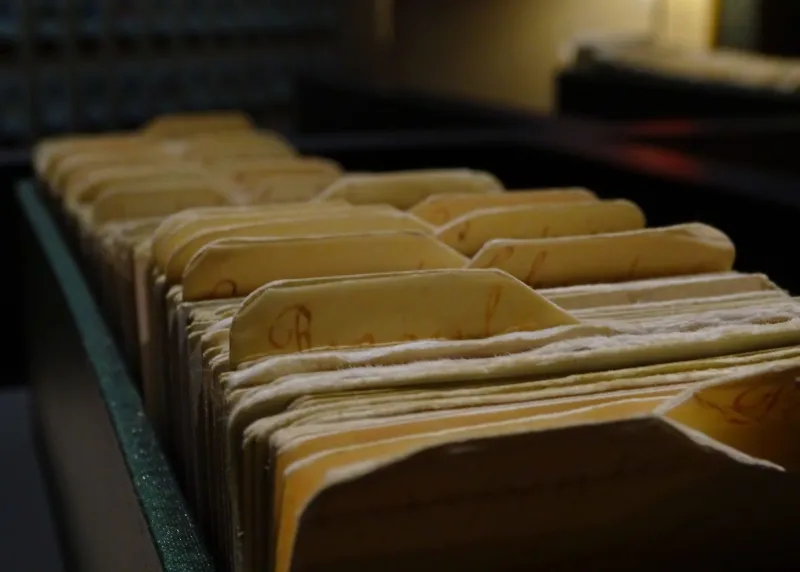
The error itself was buried in the kind of administrative paperwork that nobody reads unless they have a specific reason to go looking. Field notes from census enumerators, boundary maps from county offices, the raw tallies before aggregation — none of that material was routinely cross-checked once the final population figures were certified.
It wasn't until a later census cycle, when workers were trying to reconcile historical district records with updated boundary surveys, that someone noticed the overlap. Two sets of enumeration records covered the same physical geography. The same households appeared in both sets under slightly different transcriptions of their names and addresses — close enough to be obviously identical once you were actually looking, invisible when you weren't.
The Quiet Unraveling
Here's where the story gets genuinely interesting: fixing a census error of this magnitude, after the political consequences have already played out, is not a simple process. You can't un-seat a congressman retroactively. You can't invalidate the legislation he voted on. The constitutional machinery had already turned, and reversing it would have created a legal nightmare far messier than the original mistake.
So instead, the correction happened quietly. In the reapportionment that followed the next census, the district's corrected population figures were used without fanfare. The extra seat simply wasn't renewed. No press release explained why. No congressional investigation was launched. The official record, to the extent anyone was paying attention, suggested only that population shifts had altered the region's representation — a perfectly ordinary thing that happens every decade.
The bureaucrats who discovered the error and managed its resolution left behind almost no documentation of their reasoning. What survives in the archival record are the corrected tallies and a handful of internal memos that reference "reconciliation of district boundaries" in language so deliberately neutral it reads almost like a parody of bureaucratic caution.
Why This Actually Matters
It would be easy to dismiss this story as a historical footnote — a rounding error in the grand machinery of American governance. But consider what actually happened. A counting mistake, made by field workers with pencils and paper, produced a congressman. That congressman cast votes. Those votes contributed to outcomes. For the span of at least one full congressional term, the political representation of an entire region was quietly miscalibrated because two guys walked the same street without comparing notes.
The reapportionment process has grown considerably more sophisticated since then. Modern census methodology involves multiple layers of verification, digital cross-referencing, and statistical sampling techniques designed precisely to catch the kind of overlap that derailed things a century ago. The Census Bureau today would likely catch this kind of duplication before it ever reached the aggregation stage.
But the underlying vulnerability — the gap between what gets counted and what gets verified — hasn't entirely disappeared. Every decade, the census still relies on human judgment at the edges, particularly in places where municipal boundaries are contested or where populations are difficult to reach.
The small Midwestern town, meanwhile, went on to lose population in subsequent decades, as manufacturing declined and younger residents left for larger cities. Its congressional influence, even the legitimate portion of it, eventually faded with the numbers. Nobody there today is likely aware that for a few years in the early twentieth century, their community punched above its weight in Washington — not because of political skill or civic organizing, but because somewhere in the process, someone counted them twice.
That's oddly legit democracy for you: occasionally, the arithmetic just lies.